
All traditional fire protection methodologies share a fundamental vulnerability: they are entirely reactive. Whether utilizing water sprinklers, foam, water mist, or clean agent gasses, conventional systems only activate after a fire has already ignited and caused critical asset damage.
Furthermore, the secondary damage caused by extinguishing media—such as water contamination in sensitive electronics or thermal shock from chemical agents—can often be as financially devastating as the fire itself. In mission-critical environments, a reactive approach is a liability.
DeFire USA delivers the definitive paradigm shift in life safety and asset protection: Oxygen Reduction Systems (ORS). Instead of fighting fires after they start, ORS prevents combustion from ever occurring, rendering the protected environment physically incapable of igniting.
Fire requires three components to exist: fuel, heat, and sufficient oxygen. Under normal atmospheric conditions, oxygen levels sit at approximately 21%.
Oxygen Reduction Systems continuously filter ambient air, introducing controlled amounts of high-purity nitrogen to reduce the oxygen concentration to a precise level—typically between 15% and 16%.
Most solid materials and flammable liquids require an oxygen level of at least 16-17% to catch fire. By lowering the threshold below this level, open flames, shorts, and sparks cannot transition into a fire.
While a 15% oxygen environment makes fire scientifically impossible, it is physiologically equivalent to the air quality inside a commercial aircraft cabin or a mountain altitude of approximately 6,500 feet. It remains entirely safe, breathable, and accessible for facility personnel without the need for breathing apparatuses.
The system utilizes precise, redundant oxygen sensors and automated control loops to maintain the exact hypoxic environment 24/7, balancing absolute fire immunity with complete human safety.
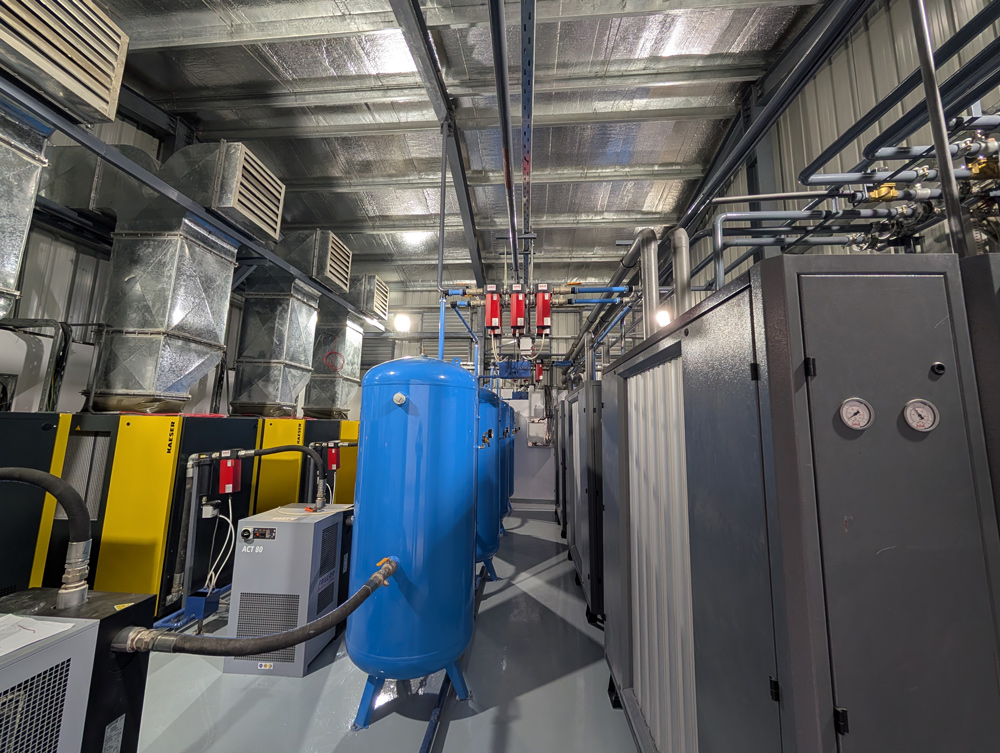
Because a fire never starts, there is no ignition, no smoke generation, no toxic byproduct release, and zero chemical or water residue to clean up.
Traditional systems require post-discharge downtime, cleanup, and recharging. An Oxygen Reduction System provides continuous, uninterrupted facility uptime.
Enormous spaces that are architecturally impossible or cost-prohibitive to flood with high-pressure gaseous reservoirs can easily maintain a steady-state hypoxic environment.
At DeFire USA, we engineer and commission Oxygen Reduction Systems to the strictest global regulatory and quality standards, ensuring total compliance with insurance underwriters and international code bodies:
EN 16750Fixed firefighting systems – Oxygen reduction systems – Design, installation, planning, and maintenance.Ignition Prevention: Defines strict testing protocols to determine material-specific combustion thresholds, ensuring oxygen levels remain below the point required for a fire to start.Structural Seals: Sets critical architectural room-integrity and air-tightness n50 values) requirements to maintain the hypoxic environment safely.
ISO 20338Oxygen reduction systems for fire prevention – Design, installation, planning, and maintenance.Global Frameworks: Establishes universal benchmarks for continuous nitrogen-enriched air systems within enclosed, protected structures.Redundancy & Safety: Mandates real-time sensor loops and strict system redundancy to eliminate failures, alongside clear safety rules for personnel access
VdS 2344 / VdS 3527Procedural guidelines for advanced fire protection component testing and system approval.Component Testing: Sets rigorous certification procedures for every individual valve, control panel, and software interface in the loop.Underwriter Compliance: Aligns system designs with advanced risk-mitigation metrics, allowing high-density facilities to secure premium insurance approvals.
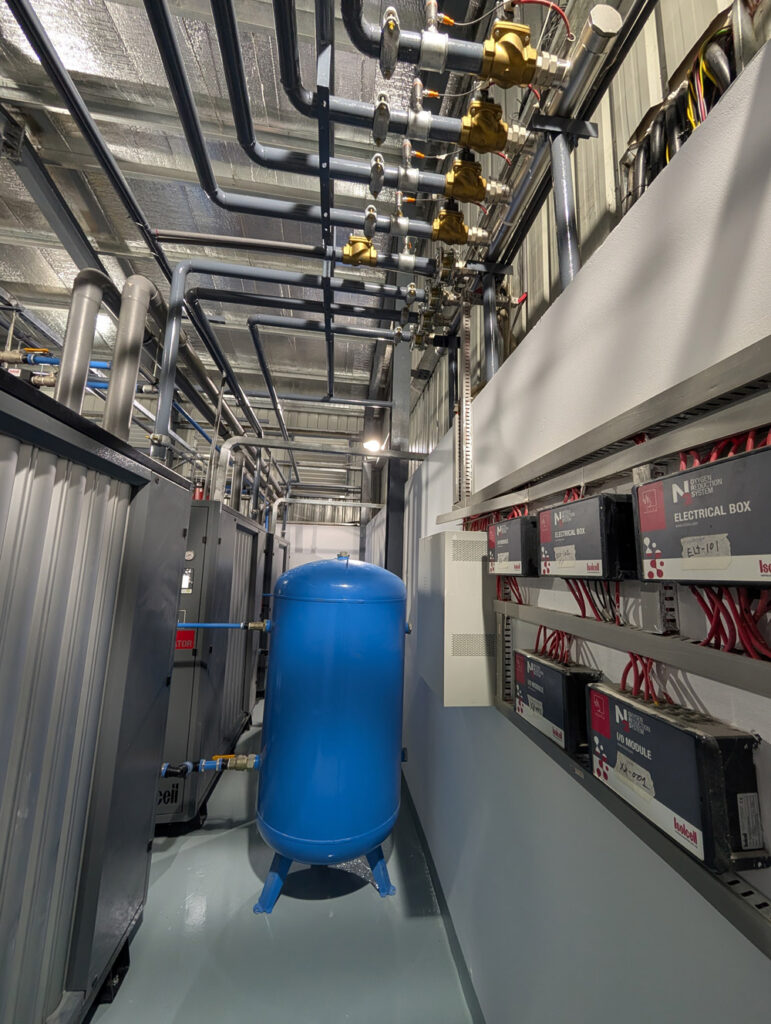
Oxygen Reduction Systems are ideal for high-value, high-risk facilities where electricity, dense storage, or irreplaceable assets make traditional firefighting methods high-risk or ineffective:
| Target Industry Sector | Specific Facility Footprint | The ORS Advantage |
|---|---|---|
| Mission-Critical Tech | Enterprise Data Centers & Server Rooms | Eliminates the risk of catastrophic water discharge or gaseous thermal shock on live electrical components. |
| Automated Logistics | High-Bay Cold Storage & Freezers | Solves the challenge of freezing pipes in wet systems and the extreme cost of trying to flood massive cubic volumes with gas. |
| Cultural Heritage | Archives, Libraries, and Museums | Protects rare paper documents, artwork, and historical artifacts from both fire and extinguishing media damage. |
| Industrial Processing | Paper Mills, Textile Plants, & clean rooms | Controls high-dust environments where rapid-fire propagation on organic fuels is a constant threat. |
Transitioning from fire suppression to absolute fire prevention requires meticulous architectural sealing, advanced ventilation balancing, and precise gas-generation engineering.
DeFire USA possesses the technical expertise to design, integrate, and maintain state-of-the-art Oxygen Reduction Systems tailored to your facility’s exact volumetric parameters.